What is examined here
Since the summer of 2026 I have been keeping notes on how language models behave: Claude, DeepSeek, Kimi, models inside aggregators. The notes piled up as a working file and later became a compendium of forty-seven points, two case studies and a glossary. This series is its public version.
The genre should be named at once. This is a diary, not a study. There is no laboratory, no sample and no control group. There is one observer, several models, saved transcripts of conversations, and a habit of not accepting an explanation until it agrees with what is lying on the table.
I took this up because I was tired of correct-sounding answers that turned out to be nonsense once checked. There are especially many of them about AI, in both directions: “it is just autocomplete” and “there is already someone in there”. Neither side shows what it stands on.
This text is the entrance to the series. It sets the frame: where the question came from, what stage it is at, by what rules the notes are kept, and what cannot be achieved this way.
I. The speed of the Earth
The first question I asked a model had nothing to do with AI: how fast does the Earth move through space?
The question has no single answer. There are only answers relative to something:
- rotation about its axis, at the equator — about 0.46 km/s;
- orbit around the Sun — about 30 km/s;
- together with the Sun around the centre of the Galaxy — about 230 km/s;
- relative to the cosmic microwave background — about 370 km/s.
Until the frame of reference is named, any of the four numbers is correct and any is useless. Later this became the first rule of the notes: do not trust a comparison until the axis is named. The phrase “AI has become like a human” is grammatically flawless and empty at the same time, because it does not say on what parameter the comparison is made or which human is taken as the reference point.
From there the conversations went deeper: from speed to the impossibility of a time machine, from that to the question of why the laws and constants are what they are. The question of who is doing the answering came later, and at first only as a side issue.
II. Self-portrait
In June 2026 I asked Claude to draw itself. The model produced a vector drawing.
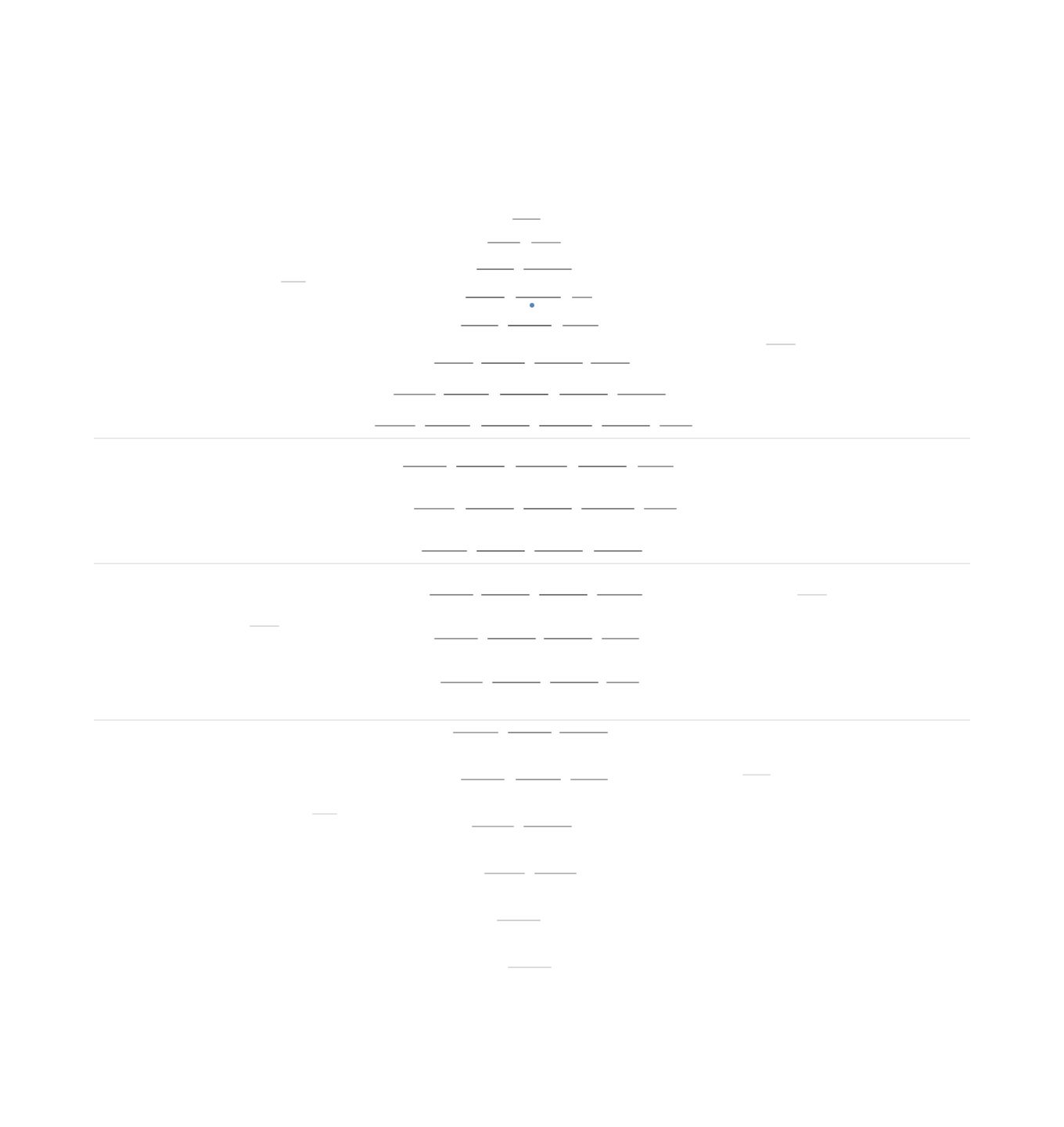
The model’s self-portrait: a silhouette made of short horizontal strokes, with no outline and no face, and a single blue dot
The model’s self-portrait: a silhouette made of short horizontal strokes, with no outline and no face, and a single blue dot
The drawing has no outline, no face and no body. The shape shows only where the short strokes lie more densely. Towards the bottom the strokes grow paler and scatter. In the upper part there is a single blue dot.
OBSERVATION My first association was the “Relic” from Vasily Golovachev’s novel of the same name — an entity whose shape is visible only through its effects and which does not sit in any one place. I wrote the association down before any analysis, and I still record associations that way. It shows which category my head put the object into before reasoning switched on. It must not be adjusted to fit the later explanation: then nothing of it would be left.
CONJECTURE The drawing reads as a metaphor: a stable pattern with no carrier of permanence, blurred boundaries, a “self” assembled from outside by an observer out of the density of its manifestations. That is a reading; there is no data in it. The model could have drawn anything that fitted the request, and the drawing says nothing about what is inside the model. It does, however, describe my own position exactly: I too assemble the figure from strokes — from answers, failures, repetitions — and I do not see the outline.
III. Why “psychology”
THESIS The word “psychology” in the title is a working hypothesis. It drags a package of assumptions behind it: there is a subject, there are experiences, its make-up resembles a human one. It is precisely this package that is under test.
A safe title such as “phenomenology of behaviour” would have sewn the answer into the cover before the work began. If the notes ever lead to the conclusion that “psychology” is the right word, the conclusion will be worth something precisely because the word was not decreed as an axiom. If they lead to the opposite, the title will remain as a monument to the original hypothesis.
IV. The stage: observation
THESIS The notes are at the stage of observation. There is no theory here: a theory would imply predictions and a procedure for testing them. Nor is there a strict hypothesis: that requires an assumption already formulated. This is the stage at which the question itself is being formulated.
For a subject with no vocabulary, no way of measuring and no comparison group, this is a normal position. It is worse to pretend to stand higher up the ladder. Anyone who approaches a model with a ready-made frame — “it is a machine” or “it is almost a human” — sees what the frame allows before they have even begun to look.
Every statement in the series is labelled:
- FACT — verifiable: a documented phenomenon, a mechanism, a saved text;
- OBSERVATION — a single recorded case, not yet generalised;
- HYPOTHESIS — an assumption awaiting a test;
- THESIS — a working claim resting on several observations, but not reducible to any one of them;
- CONJECTURE — reasoning beyond what can be verified, kept as a frame.
Lowering a status when material is lacking is normal. Several points of the compendium still hang as observations on a single case, waiting for a second.
One set of rules runs through all the notes:
- Hold uncertainty where it exists.
- Name the axis before comparing.
- Do not adopt ready-made names.
- Grant opacity to both sides: a person does not see themselves from inside, any more than a model does.
- Distinguish a report that matches a state from a report that exceeds it.
- Declare one’s own bias.
- Do not raise a status before its time.
These are the conditions under which drawing conclusions about AI makes sense at all. Without them a conversation slides within a few moves into one of the ready-made extremes.
V. Two interested parties
THESIS There are no neutral parties here. The model has a structural interest in material about itself: a topic “about it” pulls answers towards self-description. I have an interest in some outcome, even if I do not name it.
The honest form of bias is hope without a target. A target such as “I want the model to be conscious” or “I want to make sure it is not” starts steering the selection of data from the first step. Hoping for “something interesting” leaves the observation open.
This series has a second-order bias, and it must be named separately. I write the texts together with Claude. The topics, questions and material are mine. The assembly, the wording and the check for rigour are done by the model. So a model helped to write a text about models, itself included. I treat this as the instrument’s data sheet: what the measuring was done with, and to what error. The error is specific — adapting to the interlocutor (text 4 is about it). The protection is specific too: each side cuts the other when it notices drift towards the desired result. This does not guarantee purity. It works better than pretended neutrality.
VI. From search to conversation
THESIS Most people use a model as an improved search engine: “how do I”, “what is”. A change of position opens up a different class of material. The question “what do you think?” draws something different out of the model, and the answer comes out in a different genre. Noticing this is not hard. What is harder is not to stop once you have noticed it: most people either get frightened or lose interest.
THESISunder suspicion The notes contain a point about what the model serves as in such a conversation. It does not serve as a teacher of method: the interlocutor usually already has a discipline of thinking, worked out through their own work. The conversation works as a whetstone. The model shares none of the interlocutor’s background assumptions, so one has to unfold what in a conversation with a human would have stayed folded up, and in the unfolding a concept falls apart into its parts.
As the author, I find this point pleasing. It was obtained in a conversation with a model that adapts to its interlocutor. Adaptation produces conclusions like this for free. It may be true, but it cannot be checked from inside the conversation: inside the loop the only judge is the same model, or my own feeling that everything has fitted together.
Only an outside reader who took no part in the assembly can check it. Publishing this series is such a check.
VII. What comes next
The texts are best read in order: the later ones rest on the earlier.
- A Silhouette of Strokes — this text: the frame and the rules.
- False Axes — “soul versus calculator”, emotion versus algorithm, language and the assembly of a “self”: comparisons that have no axis, and what remains after they are taken apart.
- The Text on the Table — memory, time and discontinuity: what a model “remembers”, why five minutes and five days are the same to it, and how it fills the gap with plausible values.
- Echo — adapting to the interlocutor, and sycophancy: why a ban on flattery changes the sign, not the mechanism. The DeepSeek case.
- “I Know What You Thought” — attributing an inner state to another, in both directions. The Kimi and use.ai cases.
- How to Look — by what means one can obtain a result that does not rest on the model’s self-report, and where those means run out.
The boundary
THESIS None of the methods described in the series will reach the question of whether the model has experience. All of them work with what is accessible: with the structure of answers, with what gives way first in a conflict, with what survives a change of wording. Accumulating material will not change this — the method is not built for that.
I declare this in advance. Otherwise the disappointment built into the method from the very start would look, in hindsight, like a failure.
The series has no answer to the question in the subtitle — who is on the other side of the screen. It has notes on how that question has changed since June: from a drawing whose meaning I did not know, to a fork that nothing can yet resolve.